
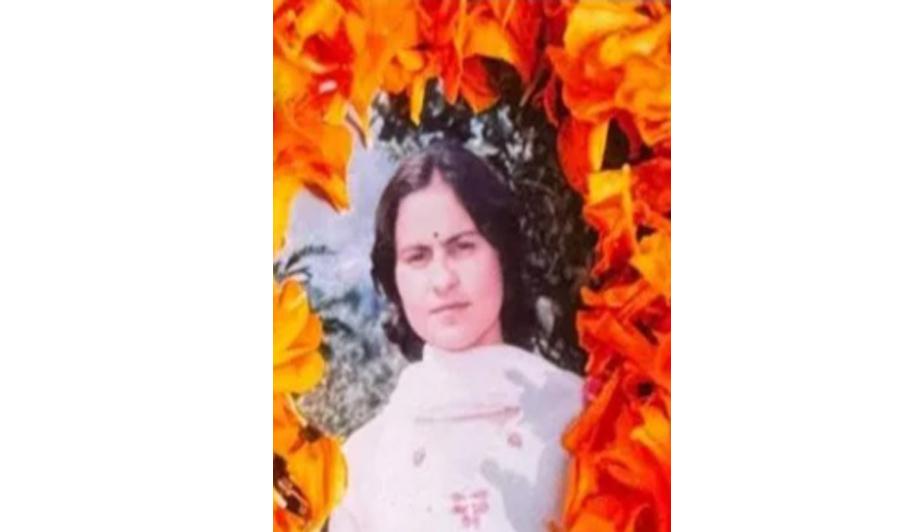
The State Investigation Agency (SIA) on Monday filed an over 700-page chargesheet naming banned JKLF chief Yasin Malik as the key accused in the kidnapping and brutal killing of young Kashmiri Pandit nurse Sarla Bhat by terrorists in April 1990. The agency described it as a "historic milestone" in the pursuit of justice for victims of terrorism.
The SIA, which reopened the case after it was handed over in 2024, submitted the chargesheet before the designated NIA court here, 36 years after Bhat, working as a nurse at Sher-e-Kashmir Institute of Medical Sciences (SKIMS) Soura, was found dead in downtown Srinagar, several kilometres away, a day after she went missing.
Besides Malik, who was the self-styled commander-in-chief of the JKLF terrorist outfit at that time, his four accomplices -- Khursheed Ahmad Chalkoo, Abdul Hamid Sheikh, Ghulam Mohammad Taploo and Mohammad Yousuf Sofi -- have also been named as accused in the case. Chalkoo is believed to be living in Pakistan after exfiltrating from Kashmir.
The accused have been charged under various sections of the Terrorist and Disruptive Activities (Prevention) Act (TADA), 1987, and Indian Arms Act, 1959.
In a statement, the SIA said time can never become a shield for terrorism and those responsible for atrocities will continue to remain answerable before the law.
The case was handed over to the SIA in March 2024 and the investigation agency carried out raids at several places over the past two years to stitch up the chargesheet against the five accused persons.
A spokesperson of the SIA said the voluminous 737-page chargesheet, painstakingly compiled after an exhaustive investigation, brings together a formidable body of oral, documentary, forensic, ballistic, medical and electronic evidence accumulated over decades and analysed meticulously.
"The filing of the chargesheet after nearly 35 years marks a historic milestone in the pursuit of justice for victims of terrorism and stands as one of the most significant breakthroughs in the investigation of legacy terror crimes in Jammu and Kashmir.
"More importantly, the chargesheet sends a powerful and unequivocal message that time can never become a shield for terrorism. No matter how many years have elapsed, those responsible for terrorist atrocities will continue to remain answerable before the law," the spokesperson said in a six-page handout.
He said the case demonstrates that while terrorism may delay justice through fear, intimidation and violence, it can never permanently defeat the rule of law.
"The investigation has revealed the involvement of Mohammad Yaseen Malik, then Chief Commander of JKLF, along with Khurshid Ahmad Chalkoo, Abdul Hamid Sheikh, Mohammad Yousuf Sofi alias Idrees and Ghulam Mohammad Taploo in planning and executing the abduction and brutal killing.
"While Abdul Hamid Sheikh, Mohammad Yousuf Sofi alias Idrees and Ghulam Mohammad Taploo are deceased, Mohammad Yaseen Malik is presently in judicial custody in another case," he added.
The spokesperson said legal proceedings, including proclamation proceedings, have been initiated against absconding terrorist Khurshid Ahmad Chalkoo, the man who pulled the trigger.
"The chargesheet establishes offences punishable under Sections 364, 341, 302 read with 34, 201 and 120-B RPC, Sections 3(2), 3(3), 4 and 6 of the Terrorist and Disruptive Activities (Prevention) Act, 1987 (TADA), and Sections 7 and 27 of the Indian Arms Act, 1959," he added.