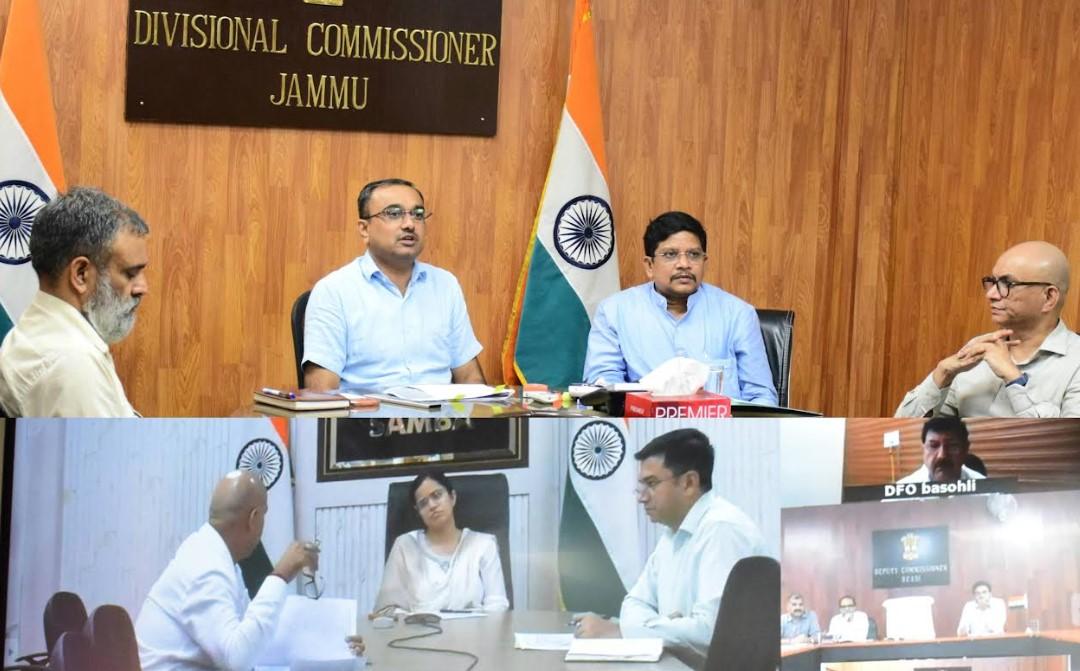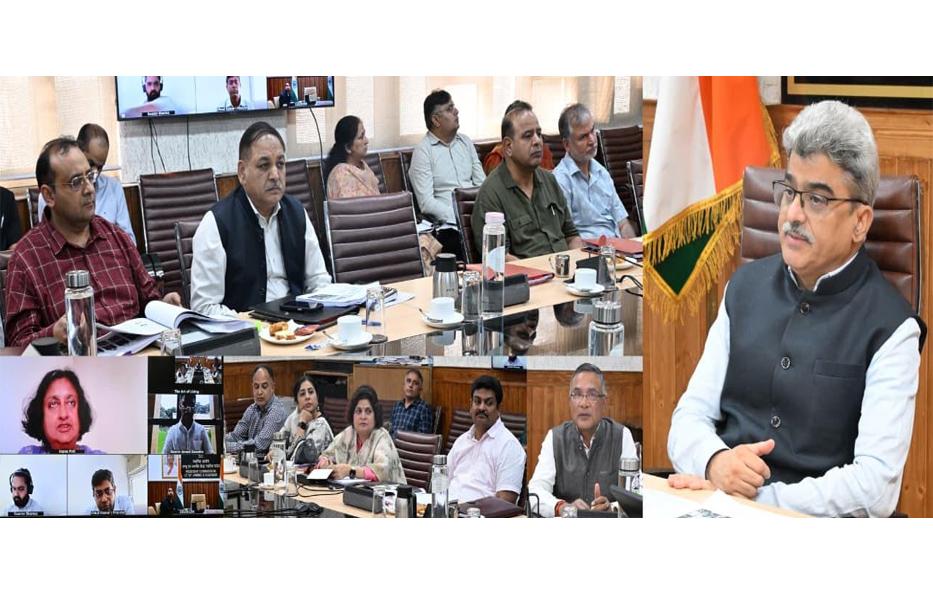

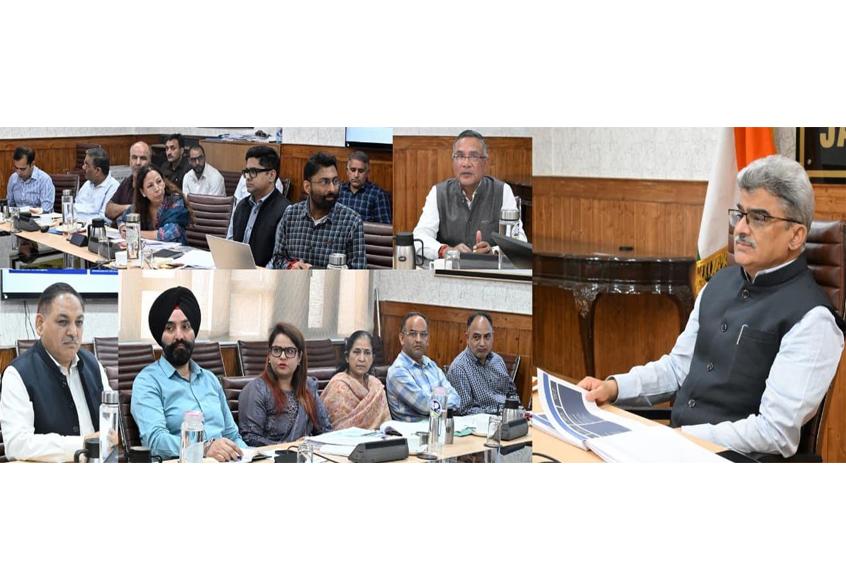
Chief Secretary, Atal Dulloo chaired the 1st UT Level Steering Committee Meeting to review and steer the implementation of the Pradhan Mantri Skilling and Employability Transformation through Upgraded ITIs (PM-SETU) scheme in Jammu and Kashmir, emphasising the need to make skill education more responsive to industry requirements and emerging employment opportunities.
The meeting besides the Additional Chief Secretary, Finance; was attended by Commissioner Secretary, Education; Secretary, Skill Development Department; Managing Director, J&K Skill Development Mission; Director, Skill Development Department; Labour Commissioner; representatives of industrial bodies and other concerned officers.
The Chief Secretary described PM-SETU as a very good model to make skill education better. He unequivocally stressed that the upgradation of Industrial Training Institutes (ITIs) should go beyond physical infrastructure and focus primarily on creating an industry-aligned ecosystem capable of equipping J&K’s youth with skills that translate into quality and well-paid employment.He further stressed that the industry partners selected for the initiative should bring not merely financial participation but also technology, domain expertise, modern training practices, exposure to industrial processes and credible employment pathways for trained youth.
He observed that our objective should be to align our ITIs more closely with industry requirements so that the skills imparted translate into meaningful and high-paying employment for our youth. He called for close collaboration between government, industry and training institutions in designing the courses and training programmes.
Giving a detailed presentation on the scheme, Secretary, Skill Development Department, Kumar Rajeev Ranjan, apprised the Committee of the proposed institutional architecture, funding pattern, upgradation plan and the roadmap for implementation in J&K.
He also divulged that PM-SETU envisages an indicative investment of around Rs 482 crore over a five-year period in J&K, with Rs 241 crore earmarked for each hub-and-spoke cluster. Under the proposed model, 10 Government ITIs will be upgraded into modern, industry-oriented skill institutions.
Moreover the institutions will be organised into two hub-and-spoke clusters, with one Hub ITI in each administrative division serving as a central technology and resource centre for four Spoke ITIs.
The upgraded hubs will provide access to advanced technologies, modern training infrastructure, incubation facilities and capacity-building support for trainers, with the scheme targeting an institutional placement rate of 75 per cent.
A major feature of PM-SETU is its industry-led implementation framework, under which Special Purpose Vehicles (SPVs)will facilitate closer participation of industry in institutional governance, course selection, technology adoption, training and placement. It would also ensure that the training offered is demand-driven rather than supply-driven, with courses periodically aligned to market trends and actual manpower requirements.
The priority training domains under the proposed transformation include Advanced and Smart Manufacturing; Heavy Engineering and Automotive; Electricals, Electronics and Telecom; Process Industries and Food Processing; and Textiles, Garments, Construction and Building Interiors, besides other emerging areas having strong employment potential here.
The Committee was informed that the financial architecture of PM-SETU follows a tripartite contribution model, with 74.7 per cent contribution from the Central Government, 8.3 per cent from the UT Government and 17 per cent from Anchor Industry Partners (AIPs). The average estimated cost is around Rs 81 crore for each Hub ITI and Rs 40 crore for each Spoke ITI.
Among the prescribed baseline parameters for participating companies are an average annual turnover of at least Rs 200 crore during the preceding three financial years, positive net worth and a regular workforce of 500 or more employees.
Concluding the Chief Secretary underscored that the real measure of the success of PM-SETU would be the ability to create a steady pipeline of industry-ready skilled manpower and connect J&K’s youth with better employment and entrepreneurship opportunities, thereby making skill development a stronger pillar of the UT’s economic growth.