
The Jammu and Kashmir Government has announced a slew of measures to ensure a balanced approach towards protection, conservation and sustainable management of forest resources while ensuring recognition and settlement of the legitimate rights of forest-dwelling Scheduled Tribes and other traditional forest dwellers in accordance with the Forest Rights Act, 2006.
The government has issued detailed guidelines through circular number 07-JK(FST) of 2026 by the Department of Forest, Ecology and Environment, directing all the concerned departments and authorities to ensure strict compliance with the applicable statutory provisions and prescribed procedures.
The circular mandates that all action related to forest land, encroachment and forest rights shall strictly conform to the Indian Forest Act, 1927 (16 of 1927), as applicable to the Union Territory of Jammu and Kashmir, the Scheduled Tribes and Other Traditional Forest Dwellers (Recognition of Forest Rights) Act, 2006, the rules made thereunder, the Wild Life (Protection) Act, 1972 and the applicable environmental laws, judicial directions and instructions issued by the competent authorities from time to time.
Noting that issues concerning the protection of forest areas, forest cover and land along with the rights of communities traditionally dependent on forests have repeatedly arisen, the government stressed the need to balance forest conservation with the recognition of legitimate forest rights in accordance with applicable statutory provisions.
It has been reiterated that all action related to forest land, encroachment and forest rights strictly conform to the Indian Forest Act, 1927, the Forest Rights Act, 2006, the Wild Life (Protection) Act, 1972, and applicable environmental laws, so that forest conservation is not compromised while legitimate claims of forest-dwelling Scheduled Tribes and other traditional forest dwellers are settled as per the prescribed statutory framework.
As part of the decision, the Government has directed that wherever occupation of forest land is reported or comes to notice, the concerned Forest authorities shall undertake proper verification of the land status and classification, relevant forest and revenue records, nature and extent of occupation, period of occupation and other relevant facts and evidence concerning the claimant, including the nature and extent of any claim made under the Forest Rights Act, 2006.
Wherever necessary, forest and revenue records shall be reconciled and the area properly demarcated to prevent erroneous identification of land, overlapping claims and unauthorized occupation. Such verification, reconciliation or demarcation shall, however, be undertaken without prejudice to any claim pending under the Forest Rights Act, 2006.
The Government has further directed that where occupation is found to be unauthorized and is not covered by a forest right duly recognized under the Forest Rights Act, 2006 or otherwise protected under applicable law, the concerned Forest authorities shall initiate appropriate action for prevention or removal of such occupation strictly in accordance with the Indian Forest Act, 1927, as applicable to the Union Territory of Jammu and Kashmir, other applicable laws and the prescribed procedure, with due regard to Section 4(5) of the Forest Rights Act, 2006.
“Pending determination of any claim under the Forest Rights Act, 2006, the existing forest character and ecological integrity of the area shall be protected. No activity shall be permitted that alters the physical status of the land, causes degradation of forest resources, damages forest growth or otherwise prejudices the protection and conservation of forests,” reads the circular.
The Forest Department shall also extend all necessary assistance and cooperation to the Gram Sabhas, Sub-Divisional Level Committees, District Level Committees and other competent authorities constituted under the Forest Rights Act, 2006, in verification and settlement of claims. Claims or proposed activities concerning protected areas or ecologically sensitive areas shall be examined strictly in accordance with the applicable provisions of the Forest Rights Act, 2006, forest and wildlife laws, environmental laws, judicial directions and other statutory requirements.
The circular also notes that for maintaining an appropriate balance between forest conservation and the legitimate rights of forest-dwelling communities, the Indian Forest Act, 1927 (16 of 1927), as applicable to the Union territory of Jammu and Kashmir, provides the statutory framework for protection, preservation, management and regulation of forests and forest produce while the Scheduled Tribes and Other Traditional Forest Dwellers (Recognition of Forest Rights) Act, 2006 (hereinafter referred to as the “Forest Rights Act, 2006”) and the rules made thereunder provide for a prescribed mechanism for recognition and vesting of forest rights of eligible forest-dwelling Scheduled Tribes and other traditional forest dwellers. “These enactments are required to be implemented in their respective fields and in a manner that ensures that genuine and legally admissible forest rights are duly recognized and protected without compromising the statutory mandate for protection, conservation and ecological integrity of forests,” the circular further reads.
It is pertinent to mention that the Tribal Affairs Department, vide Circular No. 01-JK TAD of 2026 dated 30.07.2026, has also reiterated the mechanism and procedure for settlement of claims of forest-dwelling Scheduled Tribes and other traditional forest dwellers.
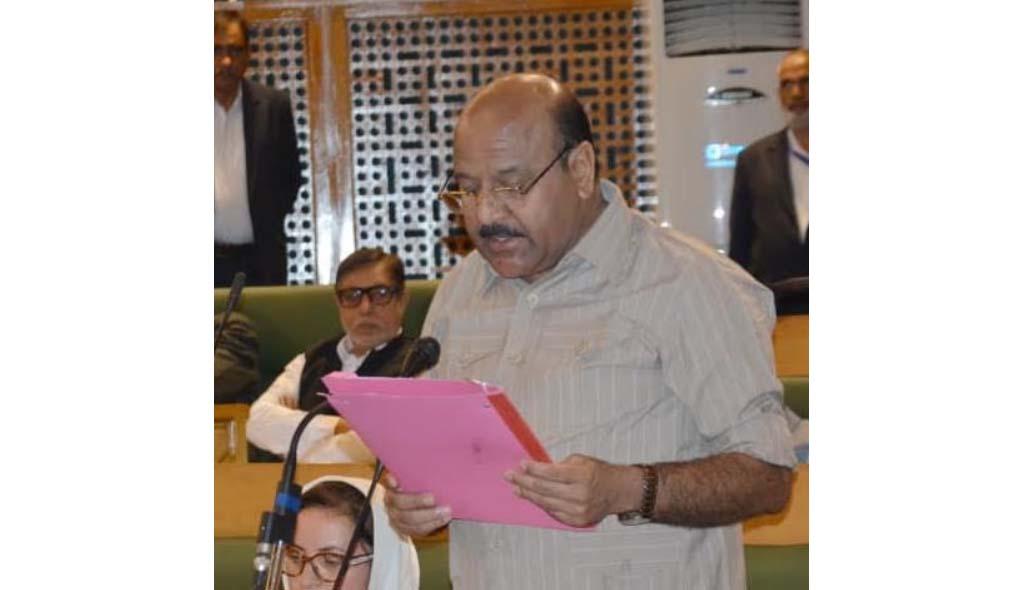
Forest Minister Javed Rana has consistently advocated a balanced approach that protects the ecological integrity of forests while ensuring due recognition of the legitimate rights of forest-dependent communities within the framework of law.
“The basic rights of our tribal communities cannot be compromised. Forest conservation and the legitimate rights of Scheduled Tribes and other traditional forest dwellers must go hand in hand, with every action guided by law, fairness and justice. Our commitment is to protect our forests while ensuring that the rights and dignity of these communities are fully safeguarded,” maintained the Minister.