
The government is considering shifting the Antyodaya Anna Yojana (AAY) foodgrain entitlement from a fixed 35 kg per household per month to 7 kg per person per month – capped at 35 kg - a move that would benefit larger poor families.
The Department of Food and Public Distribution has proposed an amendment to the National Food Security Act, 2013, and the Food Ministry has invited public comments on the National Food Security (Amendment) Bill, 2026 until July 13.
Under the current law, AAY households -- designated as the poorest of the poor -- receive a flat 35 kg per family per month, regardless of household size. Priority Households, by contrast, receive 5 kg per person per month.
This structure has meant that larger AAY families often end up with a lower per-capita entitlement than Priority Household members — the category meant for those less vulnerable than AAY beneficiaries.
"The existing household-based entitlement under Antyodaya Anna Yojana, though intended as a protective measure for the most vulnerable families, results in significant inequities depending upon the size of the household," the ministry said in a statement.
Under the proposed design, a two-member AAY household would receive 14 kg per month, while a family of five or more would be entitled to the existing ceiling of 35 kg.
Smaller households may see little change in absolute terms; larger ones stand to gain as allocation would scale with family size.
The government has framed the amendment as part of its broader push to strengthen food and nutritional security through a "human life cycle approach" -- ensuring access to adequate quantities of quality food at affordable prices, in line with the objectives of the National Food Security Act, 2013.
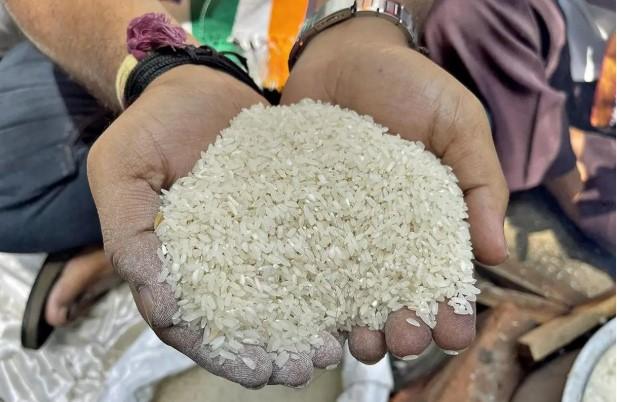
Currently, rice and wheat are distributed for free to both priority households and AAY.