
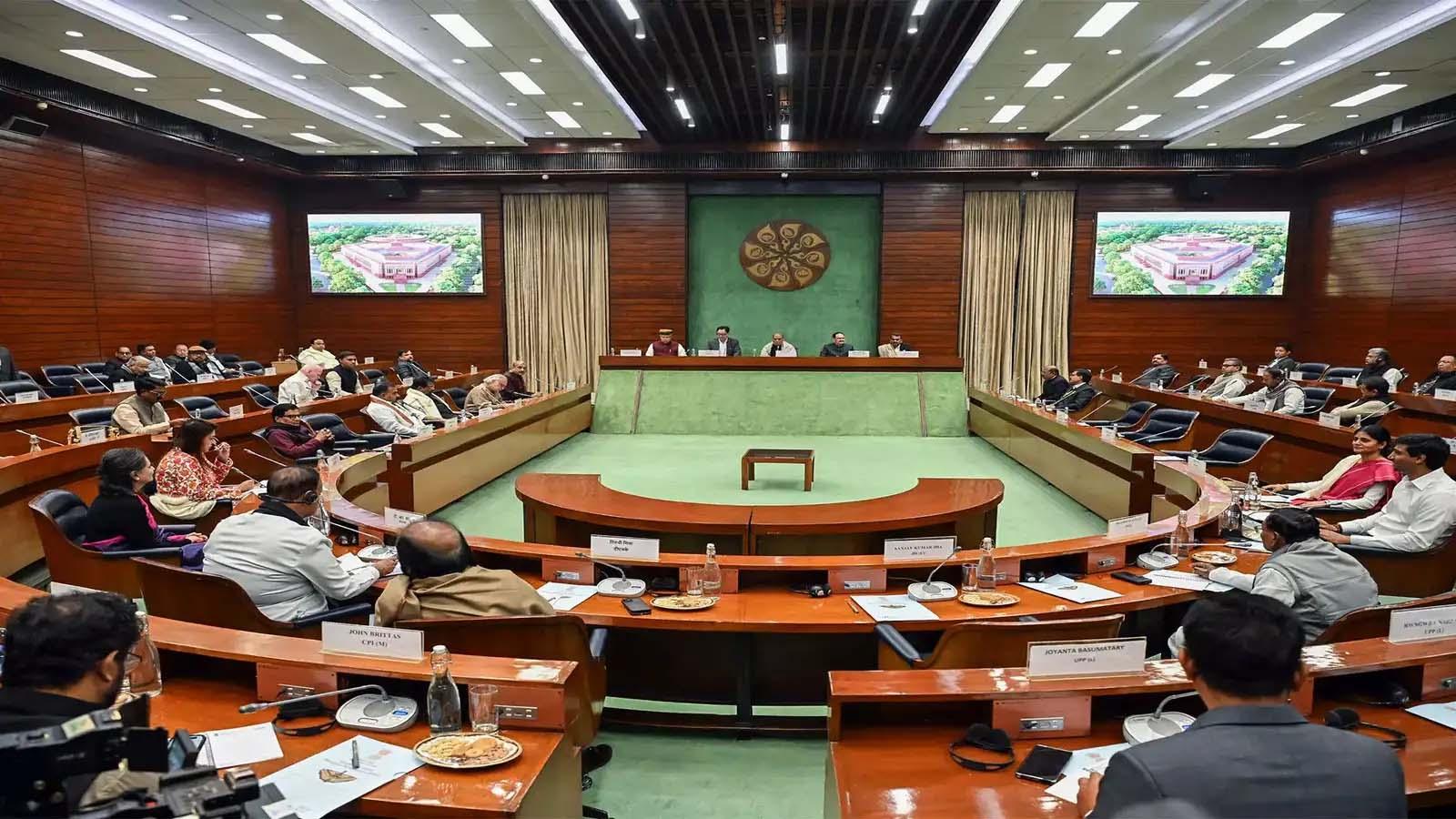
The central government on March 25 held an all-party meeting to discuss the ongoing West Asia crisis. The meeting took place inside the Parliament building and brought together leaders from across political parties to review the situation. Defence Minister Rajnath Singh chaired the meeting, while External Affairs Minister S Jaishankar, along with senior officials, briefed leaders on the latest developments and India’s preparedness.
Government says situation is under control
During the meeting, the government delivered a clear and reassuring message, stating that the overall situation remains under control and there is no need for panic. It emphasised that India is handling the developments with caution and confidence.
A detailed presentation by Foreign Secretary Vikram Misri, followed by remarks from Jaishankar and Petroleum Minister Hardeep Singh Puri, highlighted that energy security is stable.
Officials informed that there is sufficient availability of crude oil, LPG, and other essential supplies. India’s refining capacity is strong, ensuring that fuel and fertiliser supplies continue without disruption. Several shipments have already arrived, and more are expected in the coming days.
The government also underlined its active diplomatic engagement with all sides involved in the conflict. It said India is maintaining communication with multiple countries and taking everyone on board to safeguard its interests.
Officials described the continued flow of ships and supplies as a positive sign and called it a diplomatic success. The reopening of access by Iran after a brief pause was also seen as an encouraging development.
Safety of Indians, top priority
On the safety front, the government assured that there is no immediate threat to Indian citizens. Indian embassies are actively assisting people abroad, and evacuation plans are ready if needed. The safety and well-being of citizens remain the top priority.
Addressing concerns about regional security, including reports of submarine activity near Sri Lanka, the government clarified that there is no direct threat to India. It added that any such situation would be dealt with firmly.
Several leaders shared their views during the meeting. Asaduddin Owaisi raised concerns related to Iran’s Supreme Leader Ali Khamenei. The government responded by stating that diplomatic outreach was initiated as soon as communication channels reopened.
Rising tensions in West Asia
The crisis began after joint strikes by the United States and Israel on Iran on February 28. The conflict has raised global concerns, especially around fuel supply, trade routes, and regional stability. Prime Minister Narendra Modi had earlier addressed Parliament, warning that the impact of the conflict could be long-lasting. He urged citizens and states to stay prepared for challenges that may arise.
To deal with possible effects of the crisis, the government has formed several groups to closely monitor areas like fuel supply, fertilisers, and supply chains. The aim is to reduce any negative impact on the country and ensure essential services continue smoothly.
The Prime Minister also stressed that state governments will play an important role, especially in supporting poor and vulnerable sections during this period.
Opposition raises questions
Some opposition leaders have questioned the need for a separate meeting. Congress president Mallikarjun Kharge said the issue should be discussed in Parliament instead of a closed-door briefing. Leader of Opposition Rahul Gandhi initially said he would skip the meeting due to a prior commitment, though there is some uncertainty after his schedule changed.
While several leaders are attending the meeting, some are even skipping it. Trinamool Congress leaders have questioned why a full debate is not being held in Parliament and not attending the meeting. At the same time, leaders from the ruling side have urged unity, saying this is a time for all parties to come together given the global crisis.
Why does the meeting matter?
The West Asia conflict is already affecting fuel prices and could have a wider impact on the economy. The government is looking to take all parties into confidence and ensure a coordinated response.